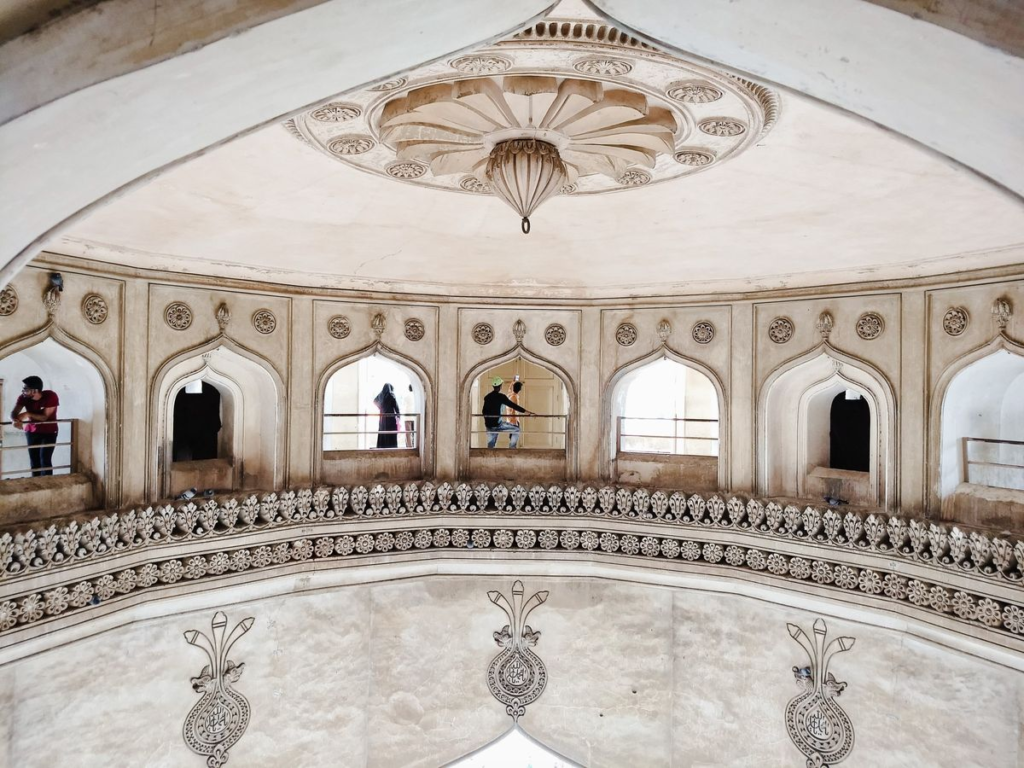

Hyderabad architecture is often described as a “blend” but that word doesn’t fully capture what the city really is. Hyderabad is less a single style and more a living archive: dynasties, trade routes, migrations, and modern ambition layered into stone, stucco, granite, lime mortar, and glass. Walk ten minutes and you’ll move from a 16th-century ceremonial city plan to Nizam-era Indo-Saracenic civic monuments, and then straight into Cyberabad’s corporate skyline. That contrast isn’t a glitch. It is the city’s identity.
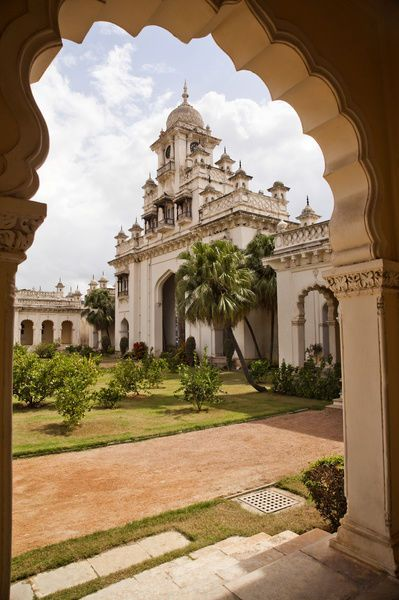
Hyderabad architecture style: what makes it instantly recognizable?
Hyderabad has a look you can spot fast because the city repeats a few visual “signatures” again and again:
- Arches that dominate the skyline: You’ll see layered arches, deep openings, and arcaded edges that create shade and a strong sense of rhythm on streets and façades.
- Domes and vertical markers: From minarets to skyline-topping domes, the city loves clear silhouettes, buildings are designed to be seen from a distance, not just experienced up close.
- Stone-and-lime solidity: Many older structures feel heavy, grounded, and tactile—thick walls, robust gateways, and surfaces that age beautifully rather than looking polished.
- A city built in layers: The biggest giveaway is contrast, heritage forms and modern glass towers sit side by side, so the “style” is really the coexistence of eras.
That combination is the Hyderabad architecture style in a nutshell: strong outlines, deep shade, rich detail, and a cityscape that refuses to be just one thing.
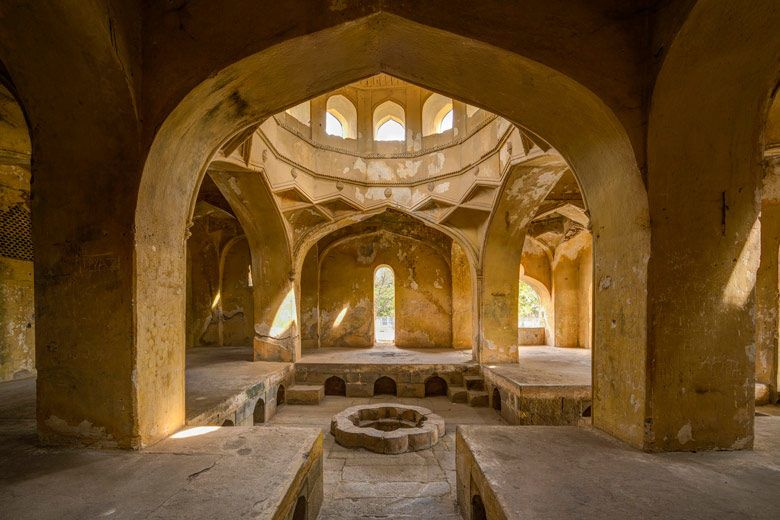
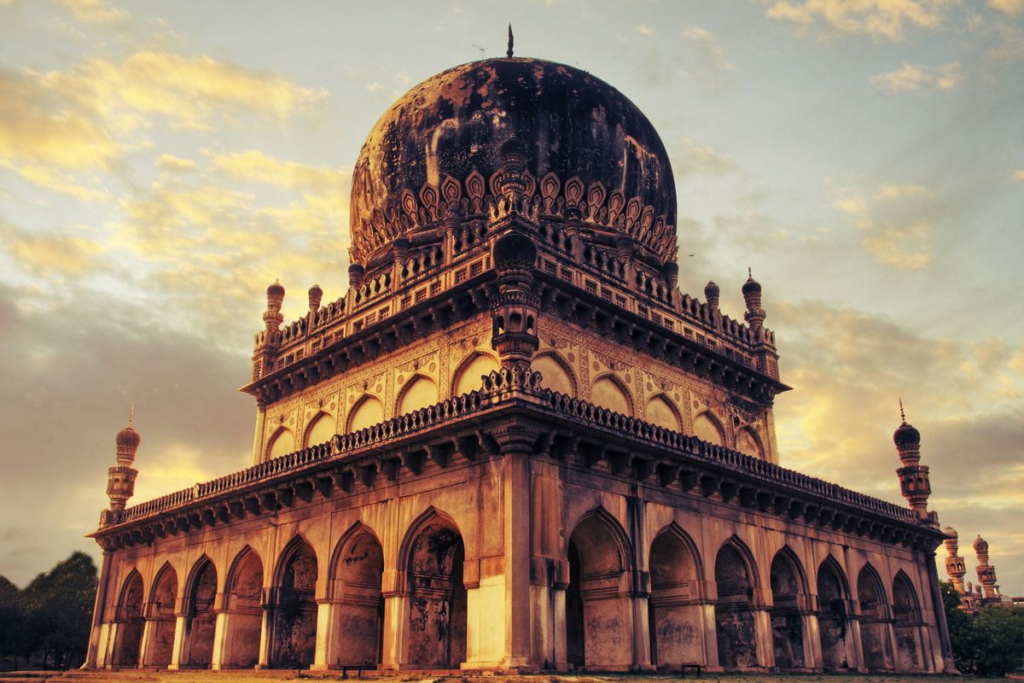
The Qutb Shahi foundation: Deccan meets Persia, and becomes something new
A big part of Hyderabad architecture begins with the Qutb Shahi period, when the region’s architecture carried strong Persianate connections while developing a distinctly local Deccani character. UNESCO’s description is useful here: the Qutb Shahi monuments show a “creative synthesis” of Persianate and Indic traditions, not a simple import, but a new identity shaped in the Deccan.
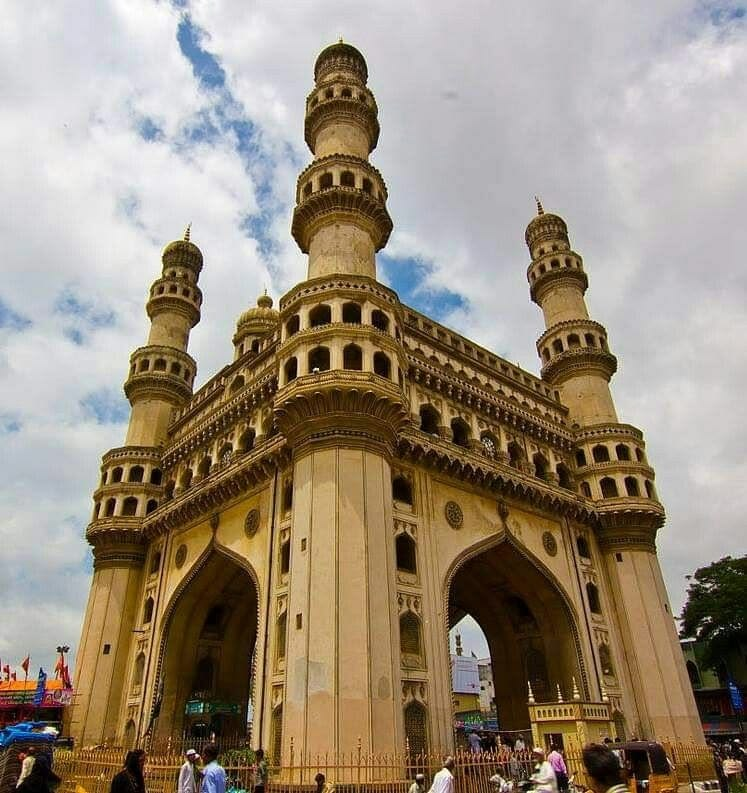
Charminar: not just a monument, but a city idea
Charminar is a global icon, but what’s fascinating is what it represents: a monumental marker placed at the city’s central node, designed around a four-quartered urban concept. UNESCO notes how it functions as a “chaubara”, a four-fold marker at the intersection of cardinal avenues and how its symbolism and ceremonial planning are baked into its placement, not just its façade.
So when people say “hyderabad architecture style,” Charminar is one of the best quick definitions: geometry, procession, arches and minarets – architecture as an organizer of public life, not merely an object to photograph.
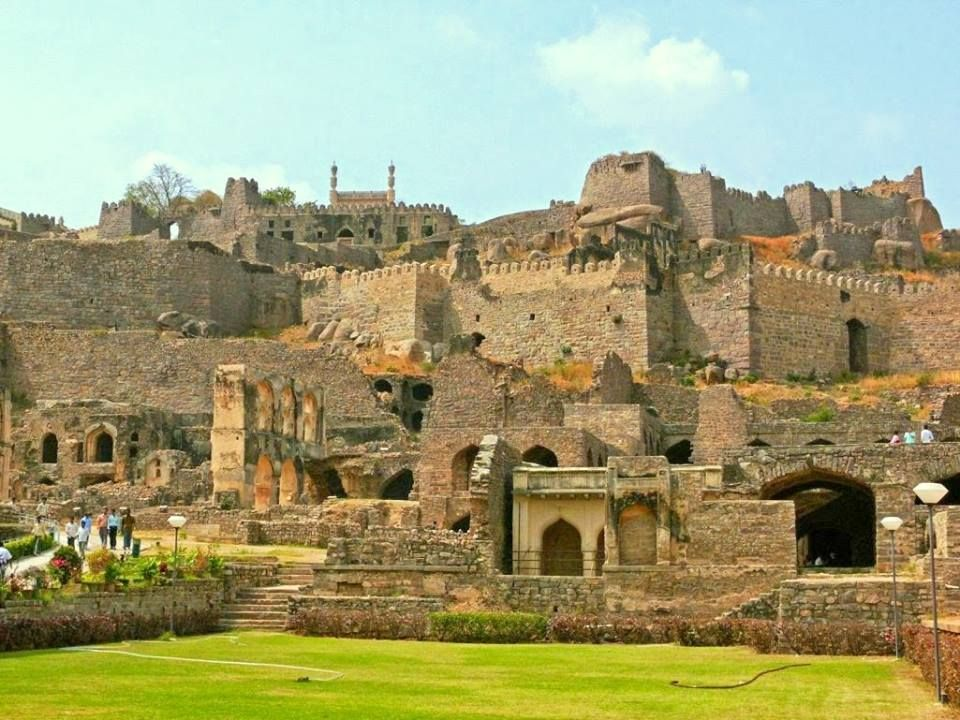
Golconda Fort: the city as a machine
Golconda’s brilliance is how it treats architecture like infrastructure. Beyond the drama of ramparts and gateways, the fort is remembered for its engineering intelligence — including the famous acoustic effect at Fateh Darwaza, where a clap can be heard at a distant pavilion, functioning historically as a warning system.
That detail matters because it shows a core trait of Hyderabad architecture: spectacle that’s rooted in performance and purpose.
The Nizam-era shift: “Osmanian” Indo-Saracenic and civic grandeur
As Hyderabad modernized under the Nizams, the city’s architectural language expanded again. The NK Realtors piece points out how this period produced major public institutions and a synthesis of medieval and modern influences across Hyderabad’s civic buildings.
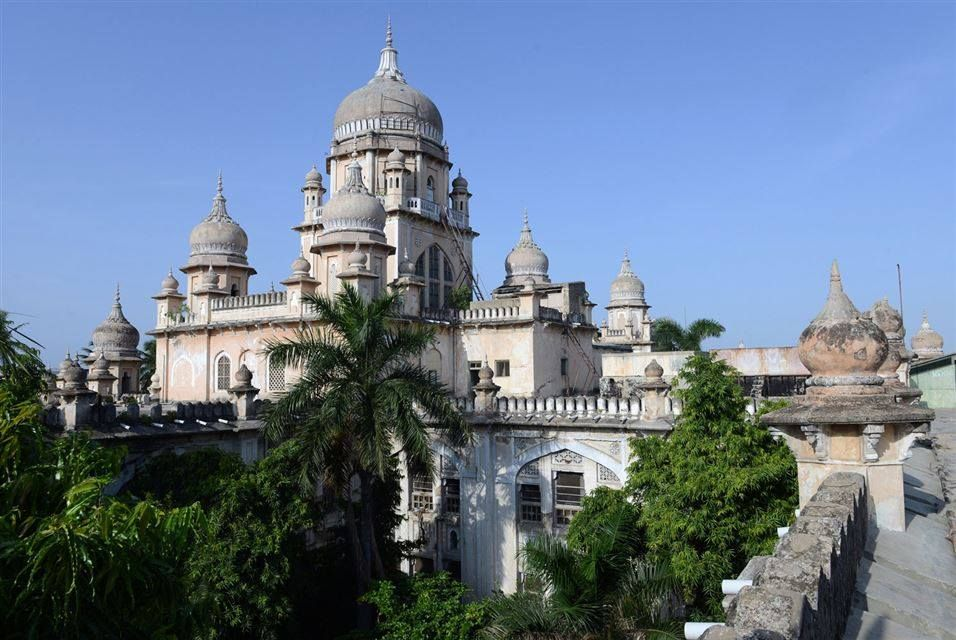
A standout is Osmania General Hospital, frequently cited as a strong example of the “Osmanian” Indo-Saracenic idiom: planned with Western institutional logic, but expressing an Indian identity through domes, chajjas, merlons, arches, and lattice-like detailing — and notably executed in granite with lime mortar. It was designed by architect Vincent Jerome Esch, and it still dominates the Old City skyline alongside the High Court across the river.
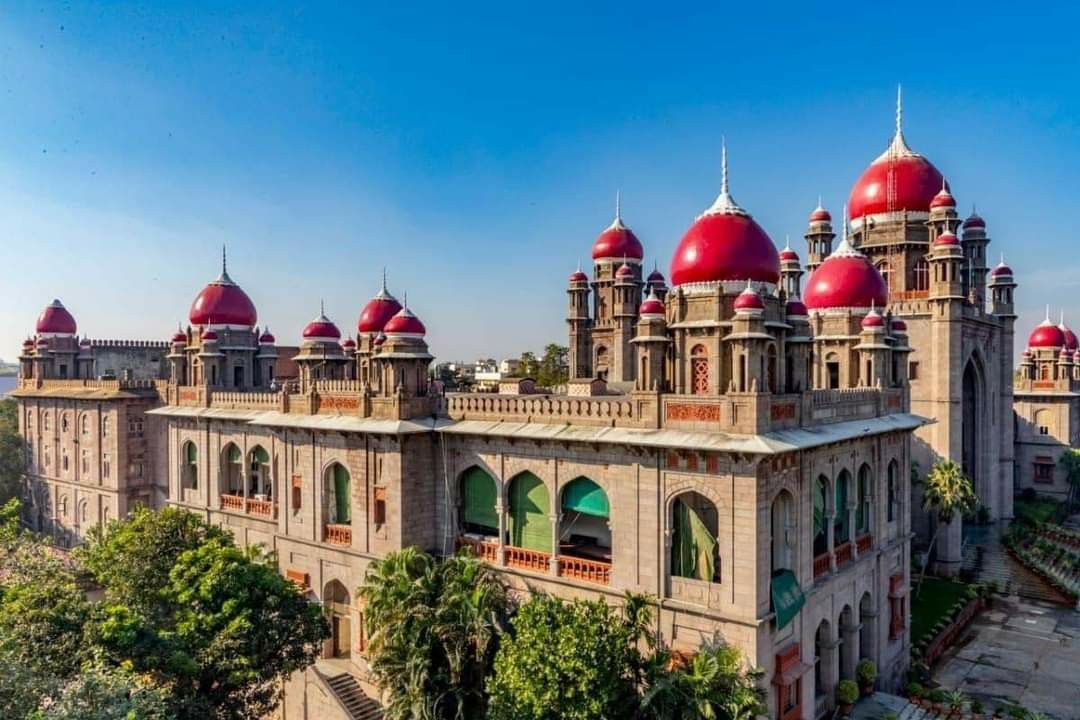
Hyderabad High Court: a skyline statement in granite
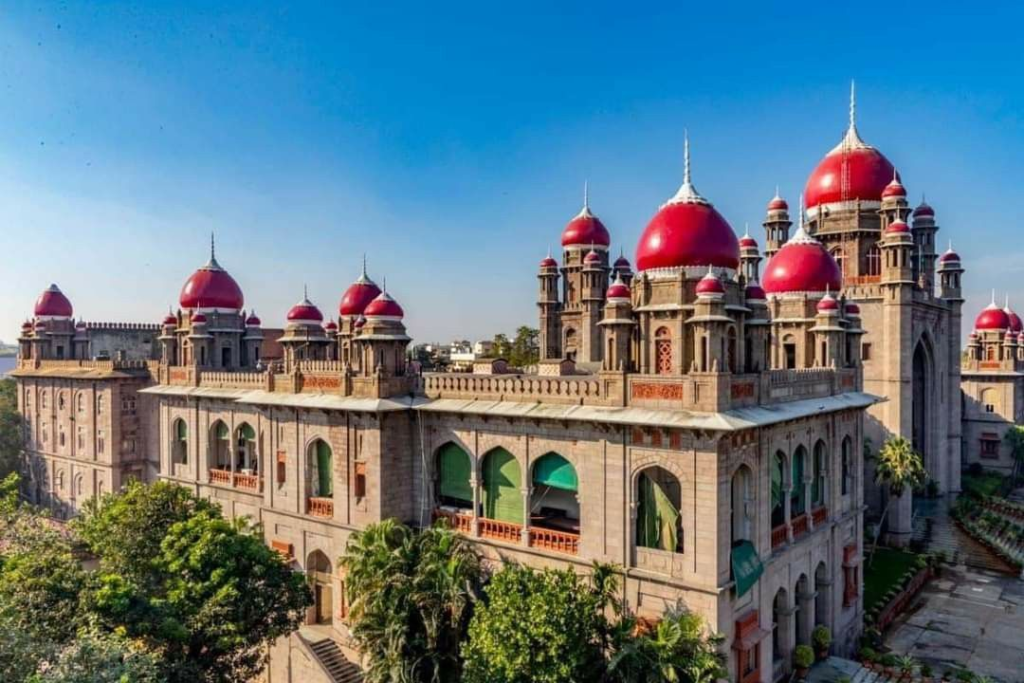
The High Court building’s presence is inseparable from the city’s visual memory – a pink-and-white granite landmark whose domes and arches announce the Nizam era’s confidence in public architecture. Reporting around its centenary highlights its Saracenic revival character and the craftsmanship and planning behind its making.
In other words: the Hyderabad architecture style isn’t only “heritage monuments.” It includes the way courts, hospitals, universities, and civic institutions were designed to look like the city deserved them.
Also Read – 6 Hidden Gems of Jaipur Where Architecture Speaks Louder Than Crowds
Royal Hyderabad: Chowmahalla and the architecture of ceremony
To understand hyderabad architecture beyond forts and icons, you have to enter palace space where architecture becomes choreography.
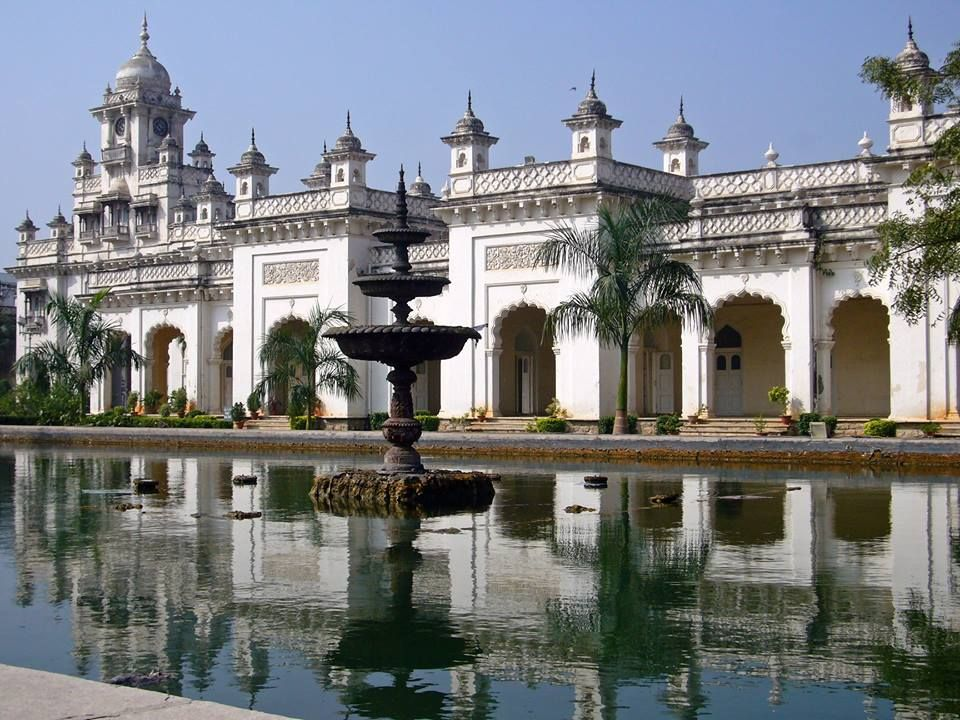
At Chowmahalla, the Khilwat Mubarak (durbar hall) is described by the palace’s official site as a blend of Mughal, Qutb Shahi, Iranian, and Turkish influences, with ceremonial use at its core (coronations, grand court, public functions). Even the details signal lineage and legitimacy, style used as statecraft.
This is one reason Hyderabad architecture stays relevant: it shows how power was expressed spatially through columns, scale, procession, and ornament and how those languages still influence how we read public buildings today.
The surprise chapter: the Spanish Mosque and Moorish imagination in the Deccan
If someone thinks “hyderabad architecture style = domes and minarets,” the Spanish Mosque is the city’s best plot twist.
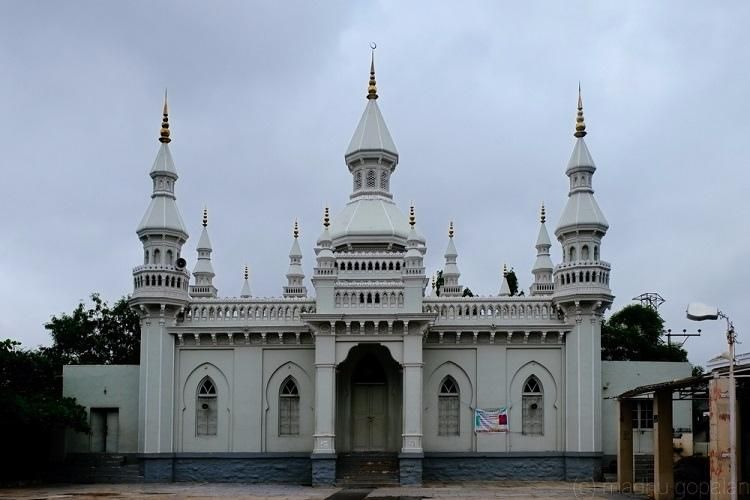
Telangana Today describes it as India’s only known mosque built in a Moorish style, inspired by Viqar-ul-Umra’s travels and monuments like the Alhambra and Córdoba, with horseshoe arches and a cathedral-like silhouette rather than the more familiar Mughal dome profile. Completed in 1906, it’s basically Andalusia transplanted into Begumpet and somehow it works.
This is Hyderabad architecture at its most interesting: confident enough to borrow globally, yet still grounded in local context.
Why Hyderabad architecture still matters today
Hyderabad’s relevance isn’t just historical nostalgia. The city offers real lessons for how Indian urban identity can hold multiple timelines at once:
- Plural design language: the city proves that architectural identity can be additive, not fragile – new layers don’t have to erase old ones.
- Climate intelligence embedded in form: courtyards, shaded edges, deep arches, screened openings, thick masonry – strategies that remain useful in a warming climate (even when we reinterpret them with contemporary materials).
- Public life as a design brief: Charminar’s city planning logic reminds us that buildings don’t end at the property line; they shape movement, markets, and memory.
Today’s “Cyberabad” glass-and-steel skyline is just the newest layer in a city that has always been comfortable being more than one thing at once.