
Coimbatore is often described through its industries – textiles, engineering, manufacturing, but the city’s architecture tells a fuller story. It’s a place where pragmatism becomes a design language: buildings are expected to work hard, stay cool, age gracefully, and still carry a certain dignity. From civic heritage to institutional campuses, from trade-fair megastructures to intimate courtyard homes, Coimbatore’s built fabric is a layered record of how the city has grown and what it values.
1) The Old City Core: Civic Architecture with Colonial DNA
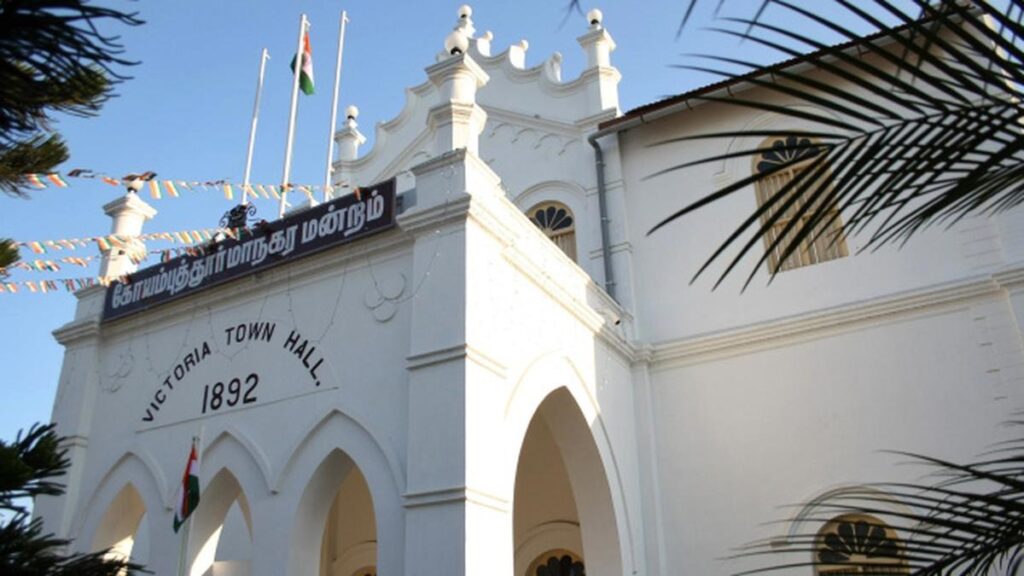
If you want to read Coimbatore’s architectural history in one walk, start around the Town Hall area. The Victoria Town Hall, built in the late 19th century, remains one of the city’s most recognizable heritage structures and a symbol of Coimbatore’s shift into modern civic life. Around it, you’ll find the kind of urban texture that defines older Indian city cores active streets, layered commerce, and public buildings designed for gathering and governance.
2) Heritage That’s Still Standing—and Slowly Returning
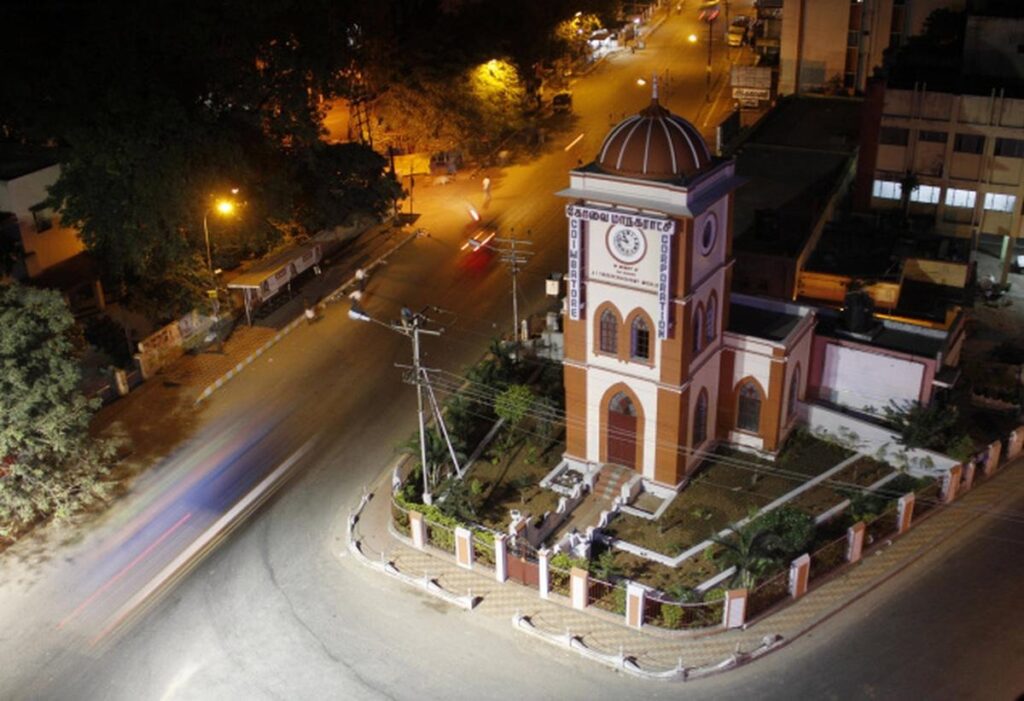
What’s exciting is that Coimbatore’s heritage isn’t frozen in time. Across the city, there’s growing interest in conserving older institutional and colonial-era buildings, restoring details, reviving traditional roof systems, and protecting the craft embedded in older construction methods. These structures matter because they preserve more than aesthetics; they preserve building intelligence – thick walls, breathable finishes, shaded verandahs, and climate-ready planning that still outperforms many modern shortcuts.
3) Industrial Coimbatore: The Architecture of Work
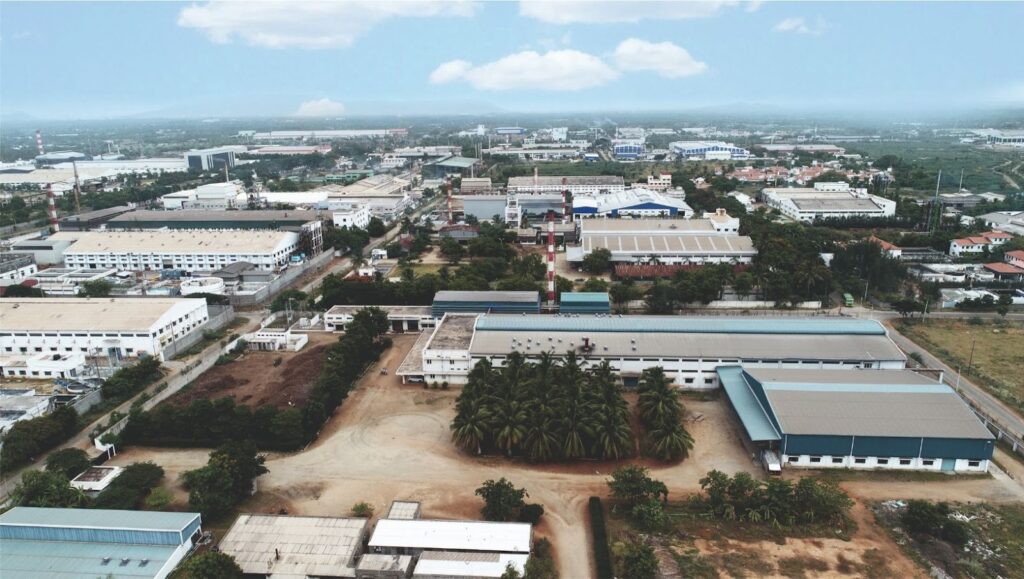
Coimbatore’s reputation as a powerhouse city shaped its architecture in a very specific way. Large plots, functional sheds, manufacturing campuses, mills, workshops, and worker ecosystems created a built language where efficiency and durability led the conversation. Even today, that culture reflects in how many local buildings are designed: honest structures, practical materials, and detailing that prioritizes long-term performance over surface drama.
4) CODISSIA and the New Civic Scale
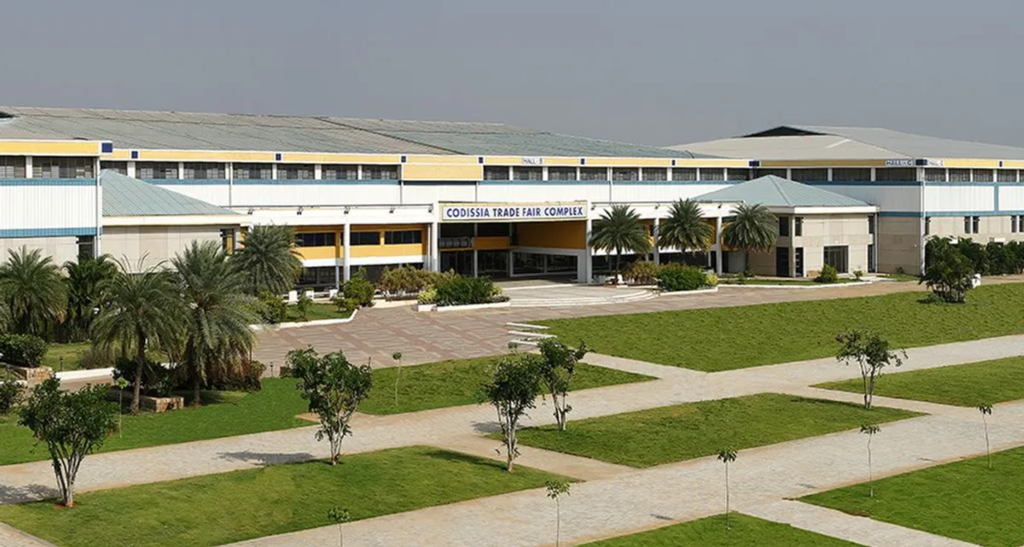
To feel Coimbatore’s contemporary “public scale,” you look at places like CODISSIA – the trade fair and convention ecosystem that supports the city’s event, industry, and exhibition culture. This is modern civic infrastructure built for large gatherings, high footfall, and big ideas. It represents a shift from the city’s older heritage civic landmarks to newer, purpose-built spaces that power commerce and community interaction.
5) Campuses, Museums, and Institutional Landscapes
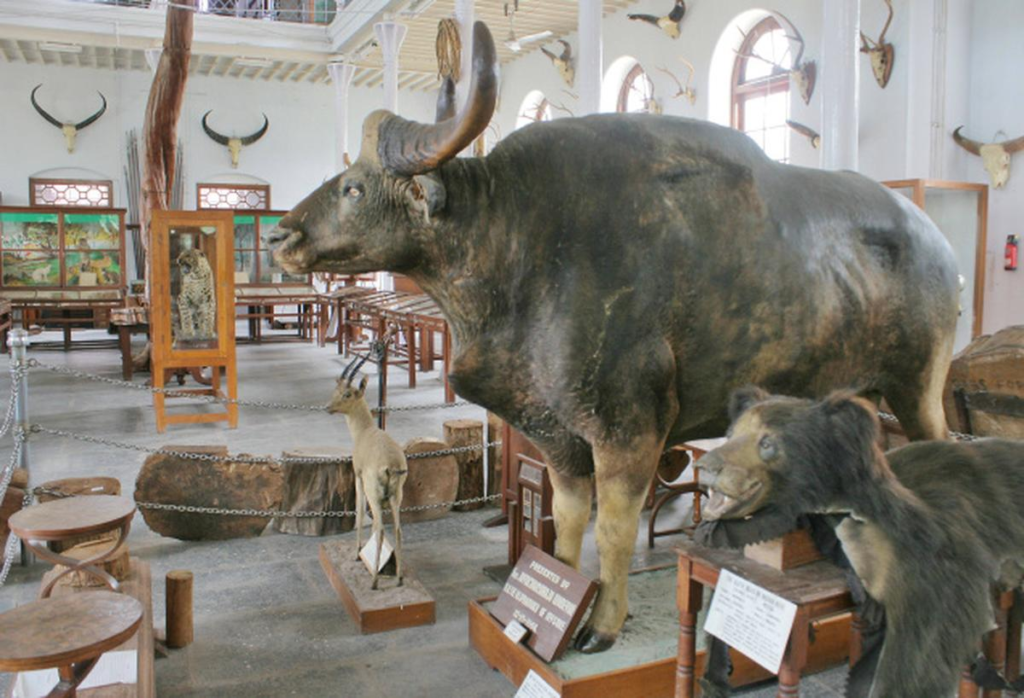
Coimbatore also has a quieter architectural side – its institutional zones and campus environments. Places like the Gass Forest Museum and the larger green campus setting around it offer a different rhythm: shaded movement, mature trees, older building typologies, and a calmness that feels rare in fast-expanding cities. This is where Coimbatore’s relationship with landscape becomes architectural, not ornamental.
6) The Courtyard Comes Back: Contemporary Homes with Local Logic
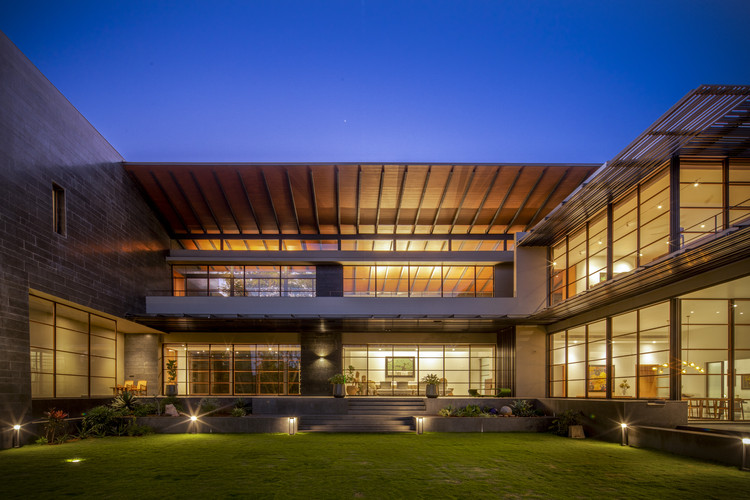
In and around Coimbatore, many contemporary homes are returning to introverted planning such as courtyards, internal gardens, skylit transitions, and controlled openings. It’s not nostalgia. It’s climate sense. Courtyards bring in daylight, improve ventilation, cool the air, and still protect privacy. In a city that values comfort and function, this approach feels like a natural evolution – modern design that stays rooted in local logic.
What to Watch for When You Explore Coimbatore
If you’re observing the city like a designer, keep an eye out for:
- Deep overhangs and shaded edges that treat sunlight seriously
- Heritage construction cues – verandahs, thick walls, breathable finishes
- The city’s “work-first” design culture in industrial and commercial zones
- Courtyard planning and quiet, inward-focused residential design
Design Perspective is Happening in Coimbatore
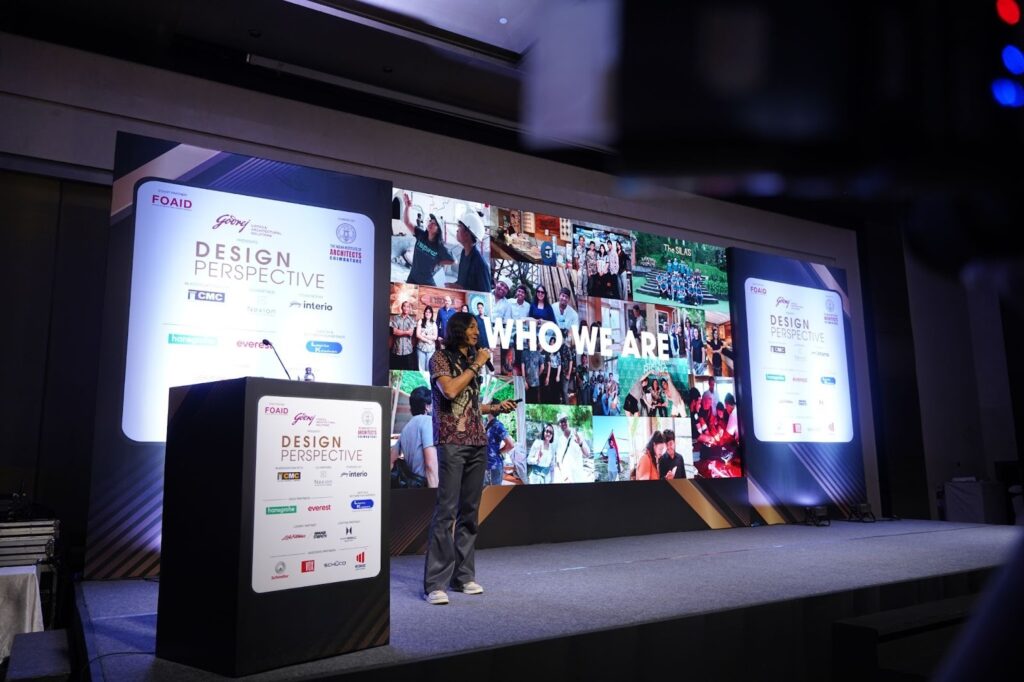
Coimbatore doesn’t chase design trends, it builds with intent. It’s a city where performance, craft, and practicality naturally meet, which is exactly why this edition belongs here.
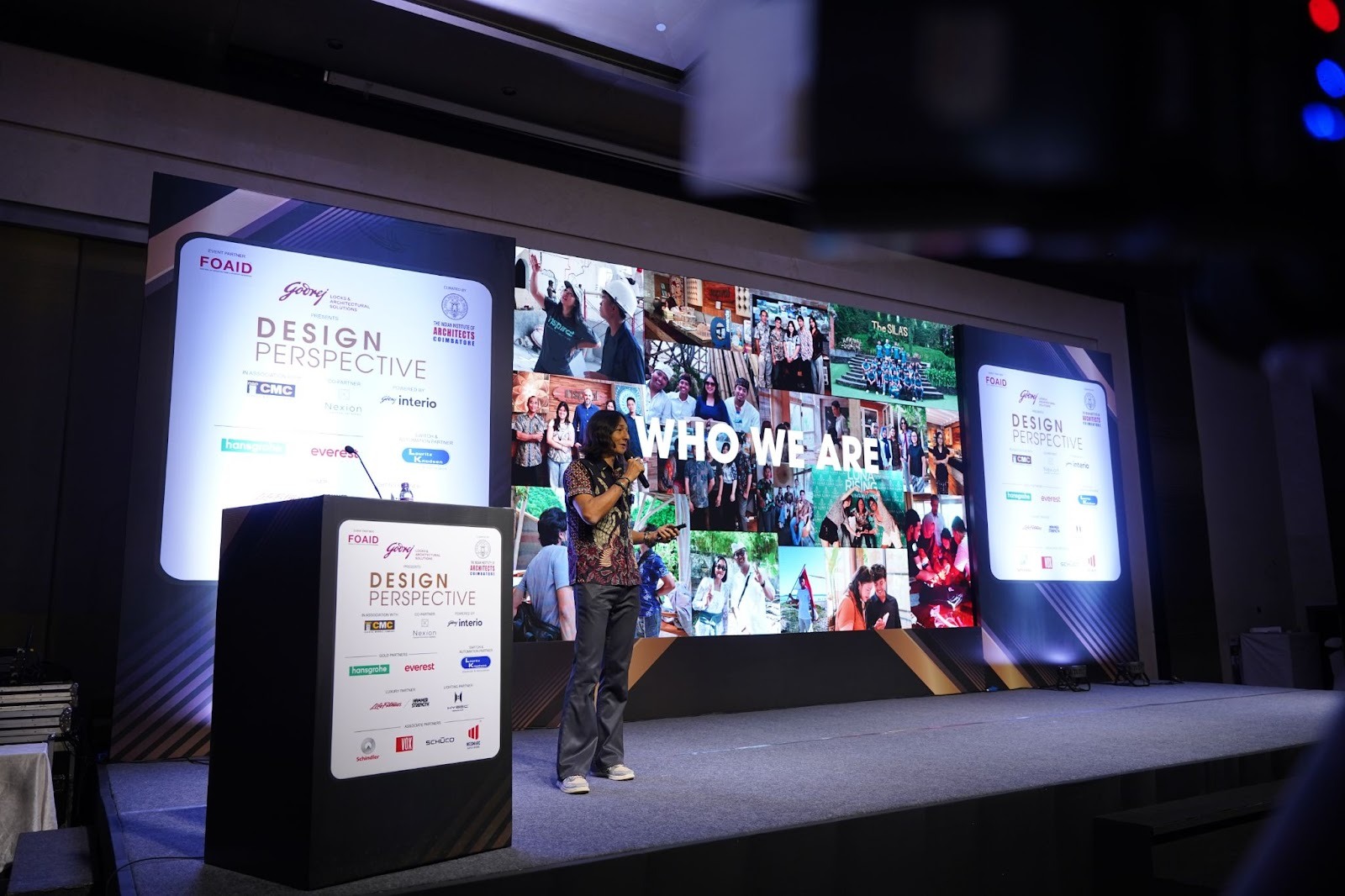
Design Perspective is FOAID’s curated design forum, an evening designed to bring architects, interior designers, and young design professionals into one room for sharp ideas, real conversations, and meaningful networking. Expect a knowledge-led session with voices shaping the built environment, followed by the kind of interaction that usually doesn’t happen on social media – face-to-face exchanges, shared insights, and new collaborations.
Design Perspective is happening in Coimbatore on 13th February, 2026. Save the date, register, and show up for an evening of ideas, conversations, and design thinking that feels relevant because it’s rooted in the way this city actually builds.